CIRCAS Lab · Cal Poly Pomona
Crop Intelligence & Research for Climate-smart Agricultural Systems

The lab of Dr. Eshwar Ravishankar. We grow food and energy from the same sunlight through agrivoltaics, engineer controlled-environment farms, and build the sensors and machine learning that run them.

7
Peer-reviewed papers
$348K
Grants awarded
Joule · EES
Flagship venues

Dr. Eshwar Ravishankar
Principal Investigator

Dr. Eshwar Ravishankar

A mechanical engineer who fell for plants, and now builds the systems where the two disciplines meet.

Trained through a Ph.D. in Mechanical Engineering at NC State, I spent years engineering semitransparent organic solar cells that let a greenhouse generate its own electricity while the crops beneath still thrive. That question became my research program: how do you divide one photon budget between a harvest and a kilowatt-hour?

Today, as Assistant Professor of Plant Science and a CEMaST Faculty Scholar at Cal Poly Pomona, my lab works across agrivoltaics, controlled-environment agriculture, and precision remote sensing. We build real hardware, sensor it heavily, and wrap it in energy–water–plant models that tell growers what to do next.

  • 2023–Assistant Professor · CEMaST Faculty ScholarCal Poly Pomona, Dept. of Plant Science
  • 2021–23Postdoctoral Research ScholarDept. of Horticultural Science, NC State University
  • 2021Ph.D., Mechanical EngineeringNC State University
  • 2019M.S., Mechanical EngineeringNC State University
  • 2016B.Tech., Mechanical EngineeringAmrita Vishwa Vidyapeetham, India

What we work on

Five ways to make an acre do more.

Every project shares one idea: treat sunlight, water, and land as a shared budget, then engineer the system that spends it best.

01

Agrivoltaics

Splitting the spectrum between panels and plants: from planar spectral beam-splitters for open-field farms to AI that steers autonomous agrivoltaic arrays through the day.

spectral beam-splittingopen-field PVUS–Israel BARD
02

Solar-Powered Greenhouses

Net-zero-energy greenhouses roofed in semitransparent organic solar cells, balancing crop yield against on-site power, validated with genomics and global techno-economics.

net-zero energyorganic PVtechno-economics
03

Controlled-Environment & Vertical Farming

Automated hydroponic and microgreen systems on a custom-built controller: IoT-sensed, energy-aware, and designed for the city.

hydroponicscustom PCBIoT
04

Remote Sensing & Precision Ag

Drones, GIS, and handheld crop sensors turning strawberry fields and orchards into daily data.

UAVGIS
05

Energy–Water–Plant Modeling & AI

Physics-based models of photosynthesis, greenhouse climate, and water recovery: the decision layer over every system we build.

crop modelingoptimization

Why it matters

Who our work is for.

Behind every system is a real person deciding how to spend a scarce resource: a beam of light, an acre of land, a kilowatt of power. We build the tools that help them decide.

Specialty-crop growers in dry climates

Keep land in production and add clean power on the same acre, with field-validated numbers on exactly what yield trades for what energy.

Greenhouse & CEA operators

Drive the energy bill toward net-zero by turning the roof itself into a power source, without giving up the crop underneath.

Urban & indoor food producers

Grow reliable local food in cities and on marginal land with automated, energy-aware controlled-environment systems.

The next ag-tech workforce

Train students on the drones, sensors, and models that modern sustainable agriculture actually runs on, hands-on from week one.


Field research · Spadra Farm

An agrivoltaic living lab in the field.

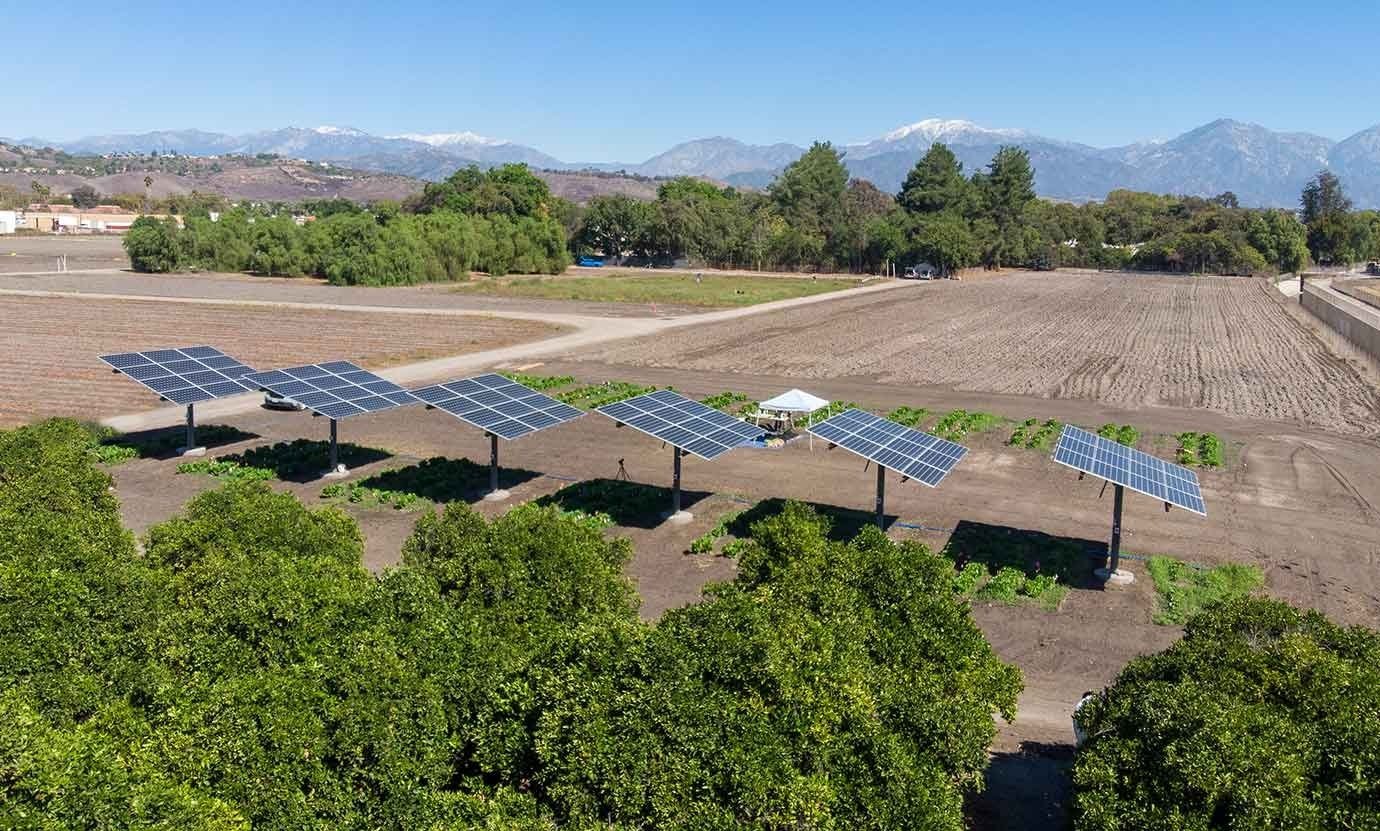
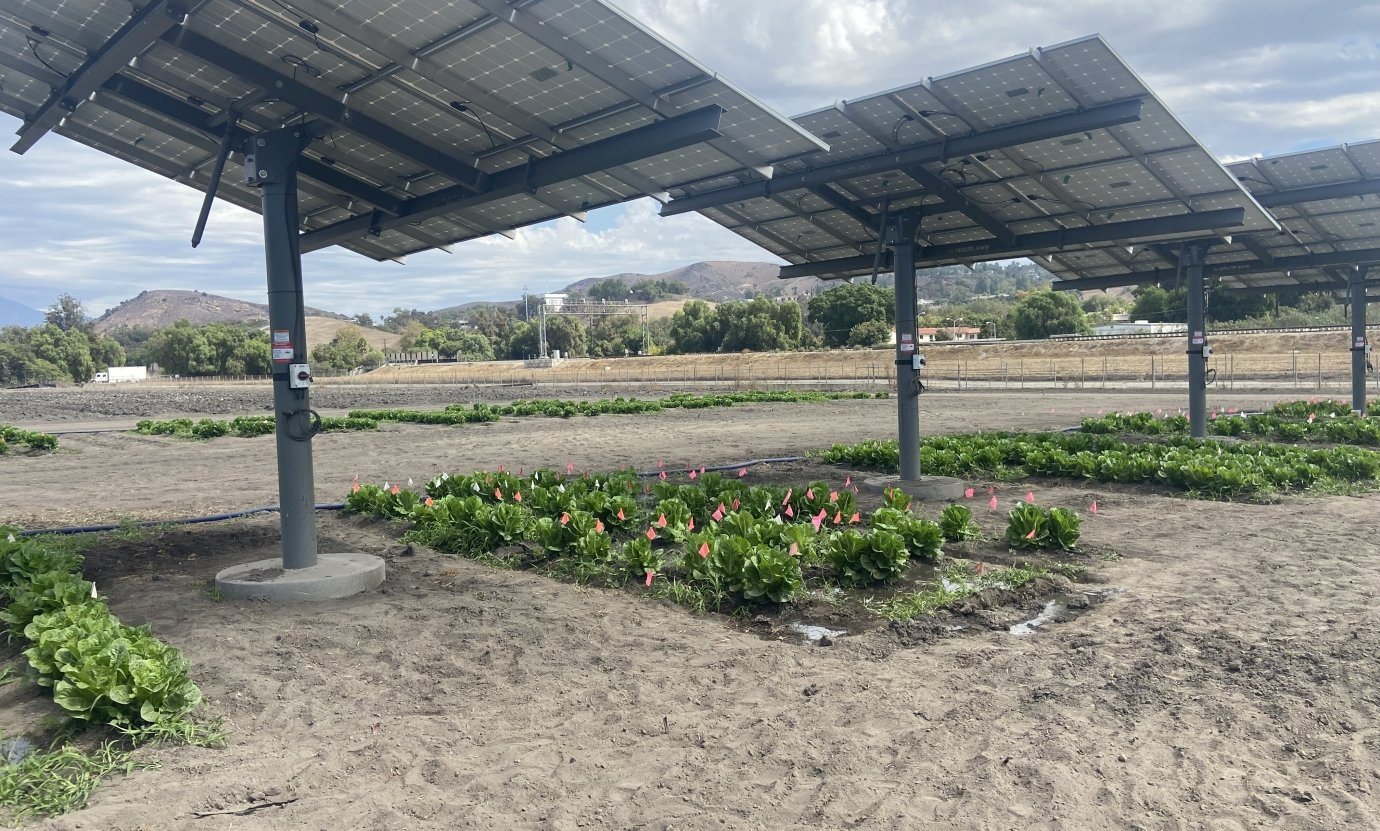
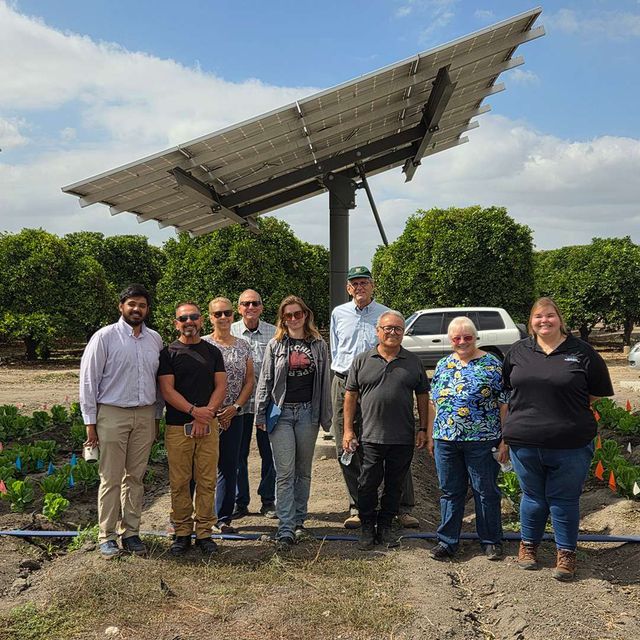
Five elevated monofacial solar arrays over working crop beds, powering the grid while lettuce grows in their shade.

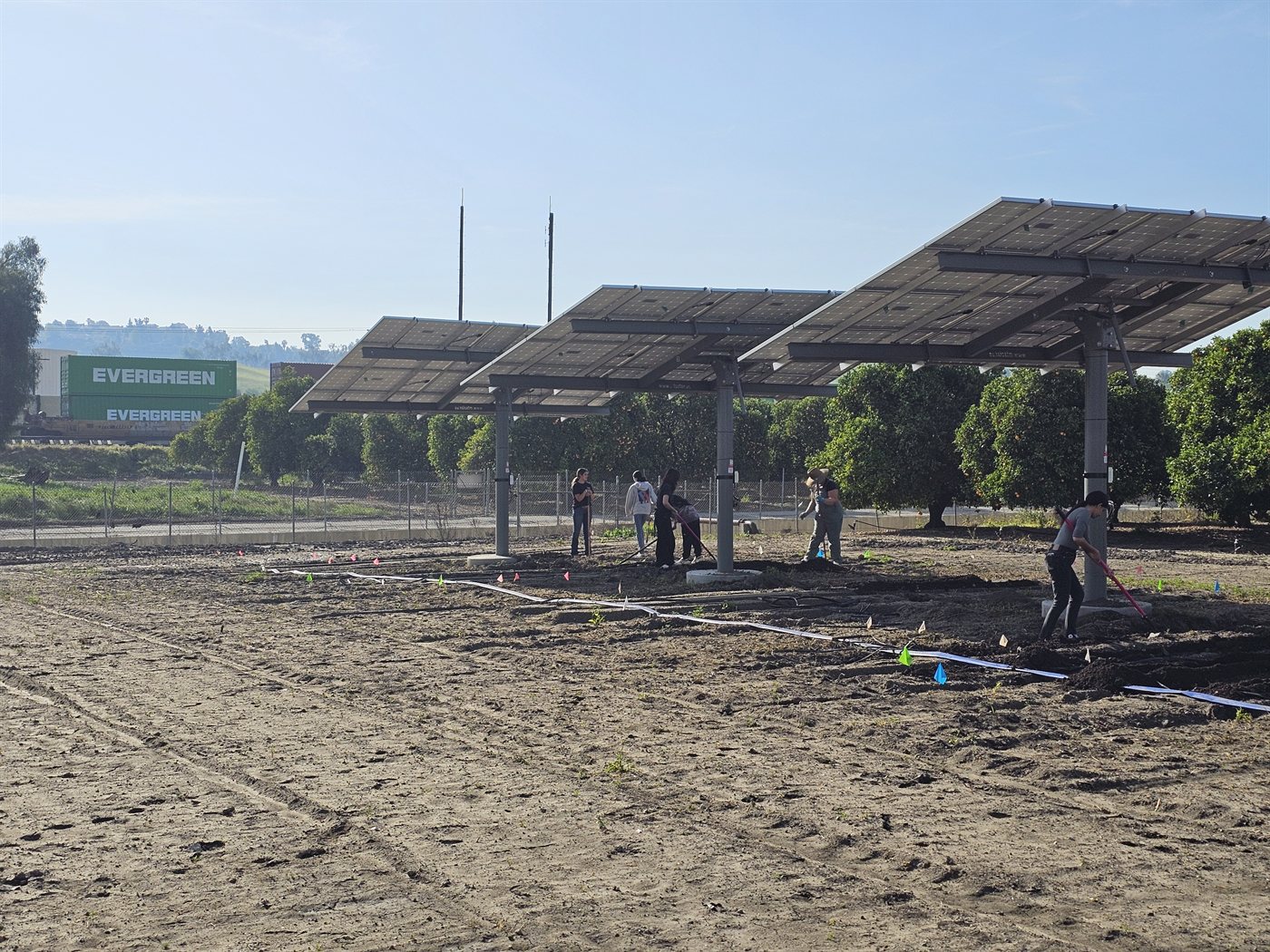
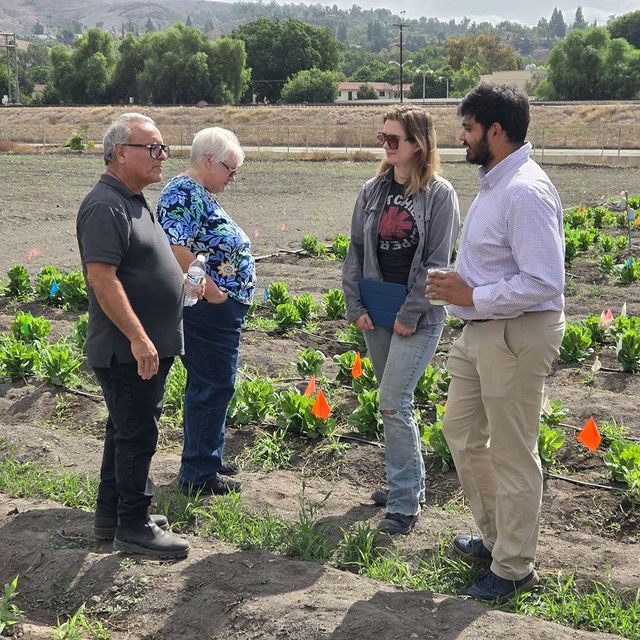
At Cal Poly Pomona's Spadra Farm, we run replicated trials of leafy greens beneath tracker-mounted panels, measuring exactly how much yield we trade for how much energy. Flagged plots, drip lines, and drone flights turn the whole array into a dataset: the field counterpart to the spectral beam-splitting work in the lab.

Site
Spadra Farm, CPP
Array
5 elevated monofacial panels
Crops
Lettuce & leafy greens
Measured
Yield vs. energy trade-off
Aerial view of the five-panel agrivoltaic array over crop beds at Spadra Farm, with snow-capped mountains behind Rows of lettuce growing under elevated monofacial solar panels, with experimental plot flags

Controlled environment · Indoor

A vertical farm that runs itself.

We build indoor grow systems that sense, decide, and act, down to the milliliter of nutrient.

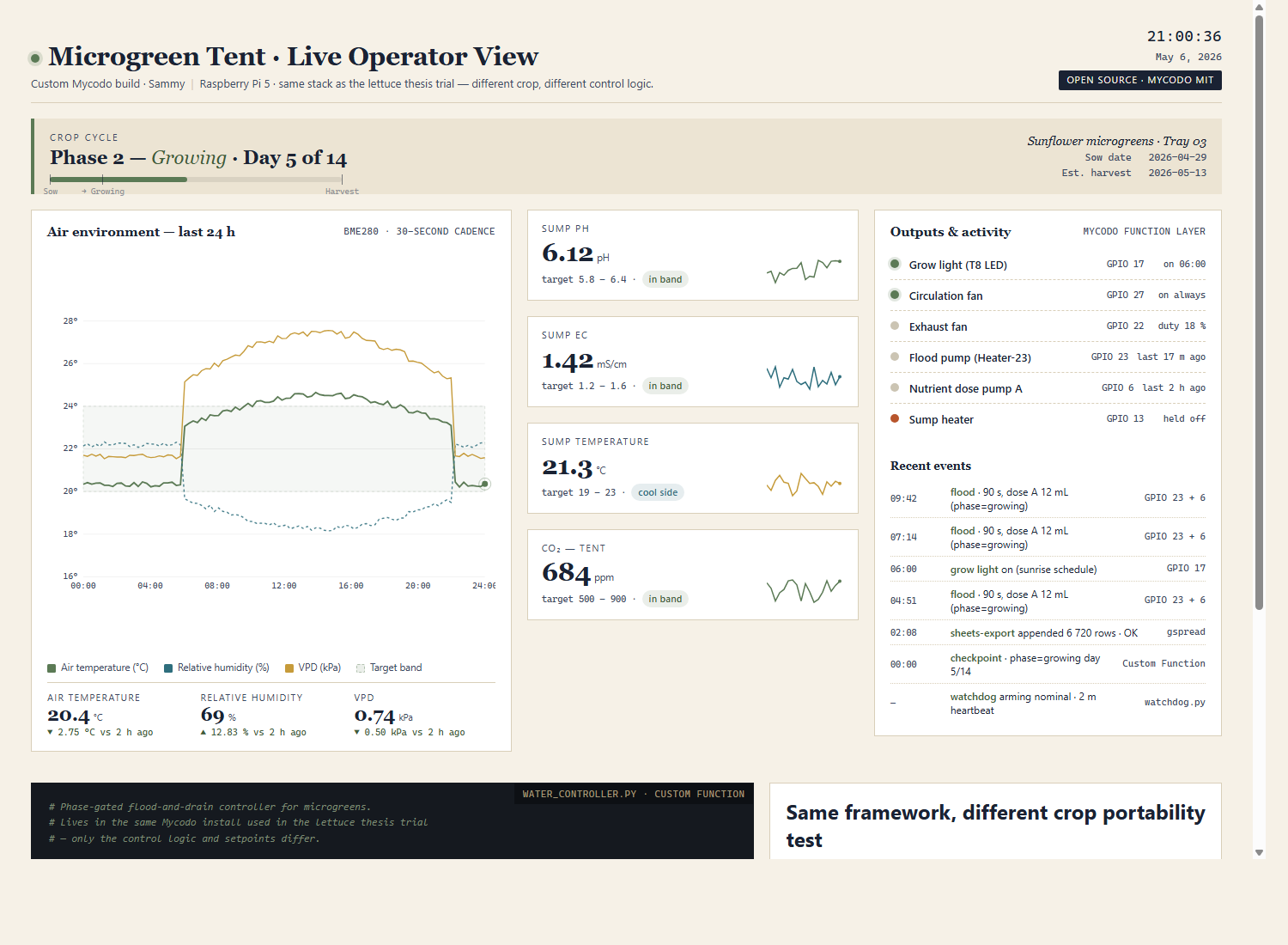
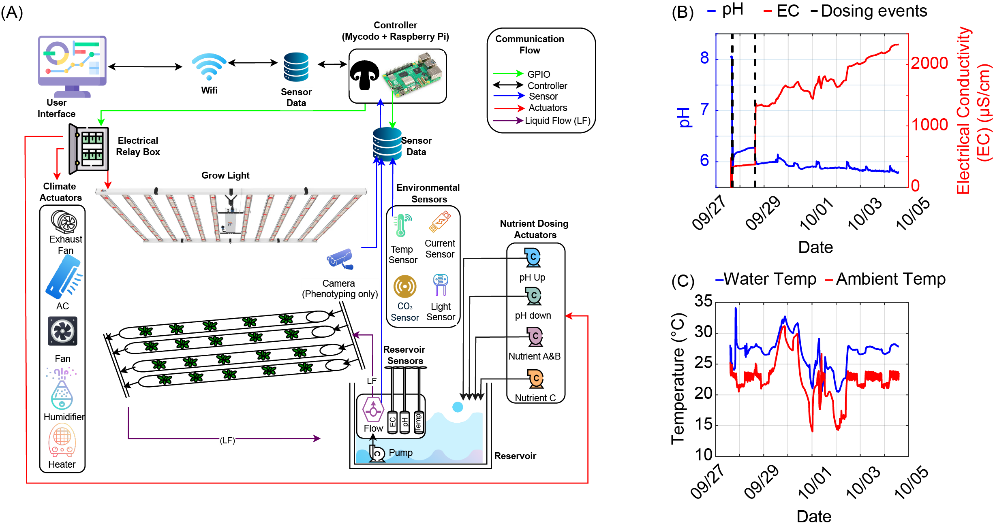
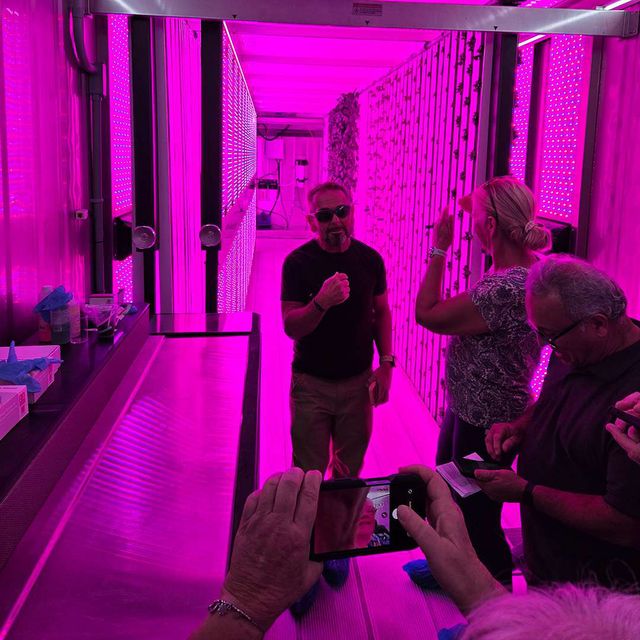
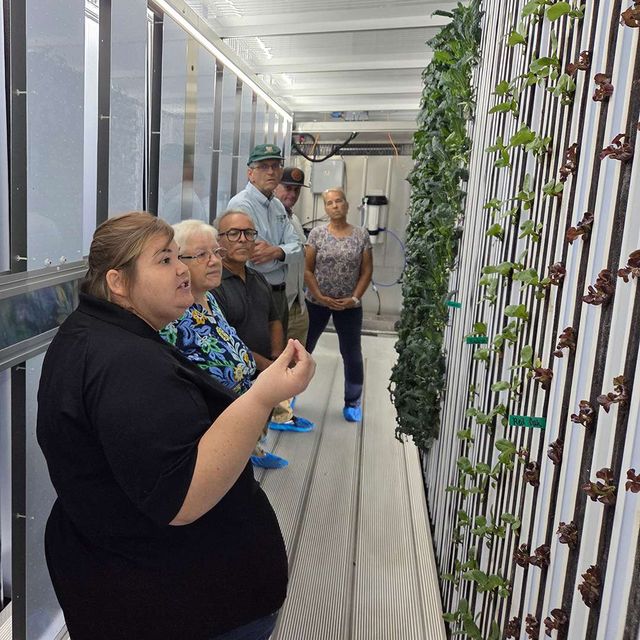
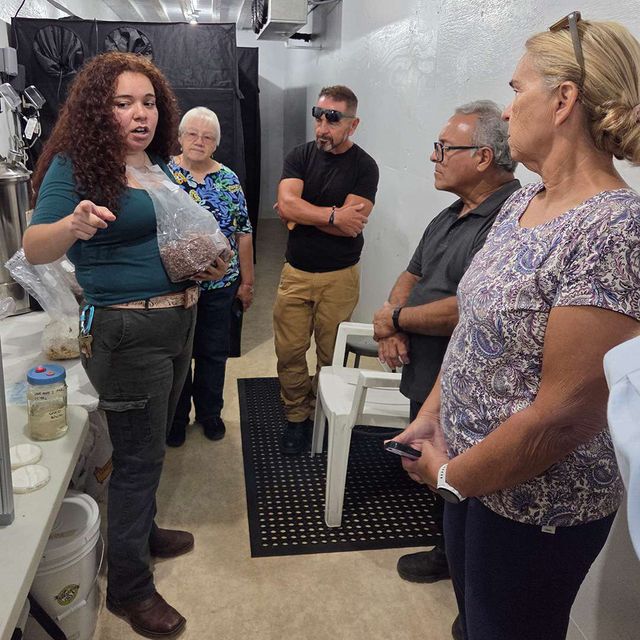
Our controlled-environment platform pairs a custom-designed Raspberry Pi hydroponic controller board with an open-source Mycodo stack. It reads pH, EC, CO₂, temperature, and VPD on a 30-second cadence, then drives a phase-gated flood-and-drain cycle, climate control, and automated pH and nutrient dosing: the same framework re-tuned for microgreens, lettuce, and mushrooms. Students use it to run real crop trials and defend theses on the data it logs.

Senses
pH · EC · CO₂ · moisture · flow · energy
Acts
Dosing · pumps · lights · climate
Crops
Microgreens · lettuce · mushrooms
Platform
Raspberry Pi 5 · Mycodo · custom board
Live operator dashboard for the microgreen grow tent: 24-hour climate chart, sump pH/EC/CO2 readouts, and a log of automated GPIO actuator events
Live operator view · custom Mycodo build on Raspberry Pi 5
System schematic: an IoT sensing and actuation network for the grow tent (Raspberry Pi controller, climate actuators, environmental sensors, nutrient dosing, and hydroponic channels), with time-series of pH, EC, and temperature
Full sensing & actuation architecture, with logged pH / EC / temperature

Selected publications

Work that moved the field.

Full list on ORCID and Google Scholar.

2026

Benchmarking Spectrum-Splitting Agrivoltaics Using Spectrally Resolved Ray-Tracing and Crop Modeling for Yield–Microclimate–Energy Balance Across Arid and Humid Climates

Ravishankar, E., Vitoshkin, H., Kribus, A., Mittelman, G., Rozenstein, O., Hernández, R.

Energy Convers. Manag. X
2026

Agrivoltaics Can Add Value to High Tunnels in a Subtropical Environment

Field, R., Abernathy, B., Ravishankar, E., Cassity-Duffey, K., Vaughn, J.

Agronomy
2020

Achieving Net-Zero-Energy Greenhouses by Integrating Semitransparent Organic Solar Cells

Ravishankar, E., Booth, R.E., Sederoff, H., Ade, H.W., O'Connor, B.T.

Joule
2022

Organic Solar-Powered Greenhouse Performance Optimization and Global Economic Opportunity

Ravishankar, E., et al.

Energy & Environ. Sci.
2021

Balancing Crop Production and Energy Harvesting in Organic Solar-Powered Greenhouses

Ravishankar, E., Charles, M., Sederoff, H., Ade, H.W., O'Connor, B.T.

Cell Rep. Phys. Sci.
2023

Genomic Analysis Reveals Emergent Traits of Crops Grown Under Semitransparent Organic Solar Cells

Charles, M., Edwards, B., Ravishankar, E., et al.

Frontiers in Plant Sci.
2020

Environmental and Economic Impacts of Solar-Powered Integrated Greenhouses

Hollingsworth, J.A., Ravishankar, E., O'Connor, B.T., Johnson, J.X., DeCarolis, J.F.

J. Industrial Ecology
2025

Economic Potential of Open-Field Agrivoltaics with Planar Spectral Beam Splitting

Mittelman, G., Atiya, V., Vitoshkin, H., Hernández, R., Ravishankar, E., Kribus, A.

Preprint

Speaking engagements

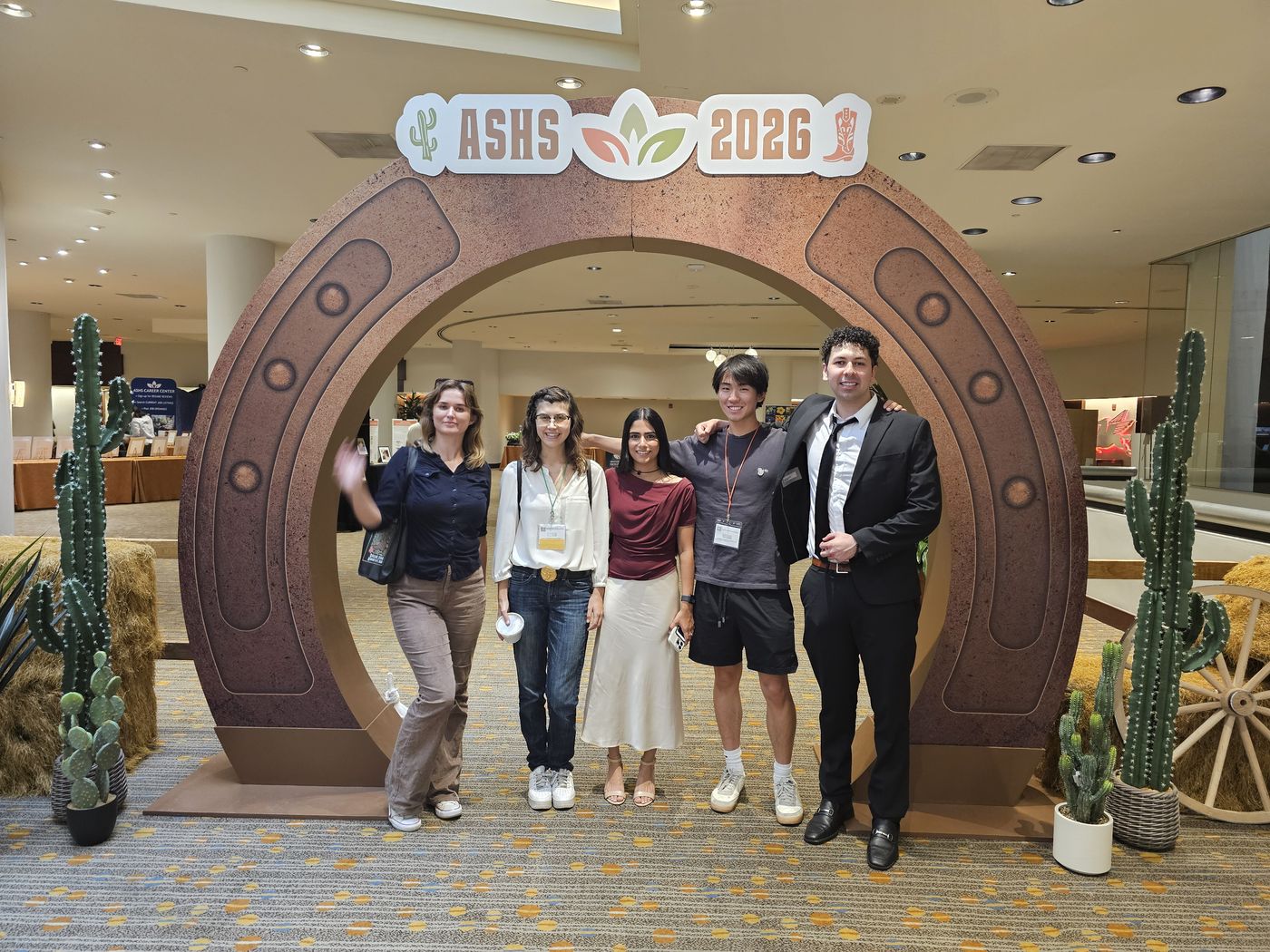
Catch the lab at ASHS 2026.

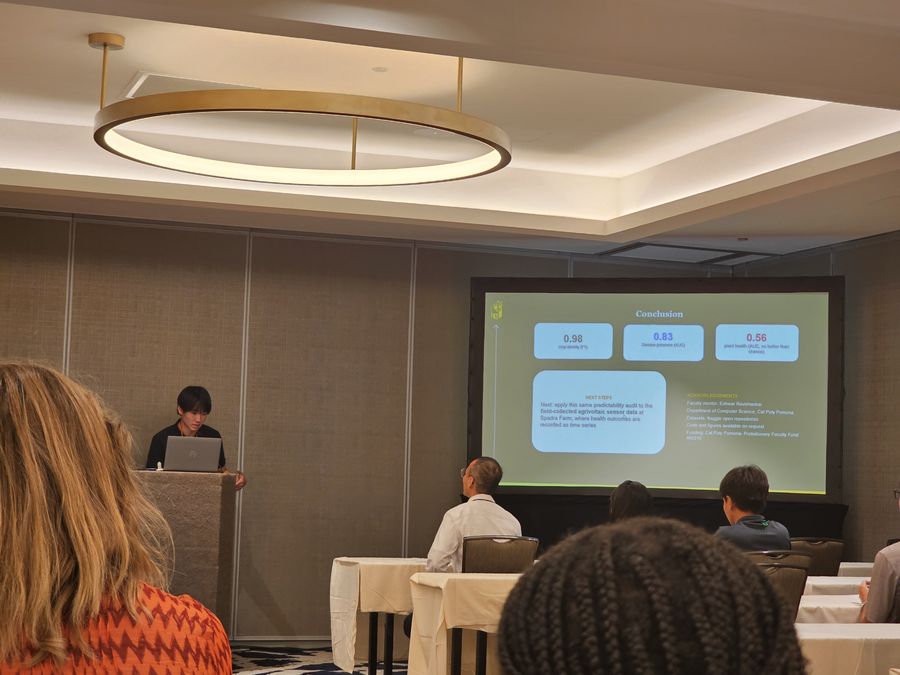
The lab is bringing seven oral presentations to the American Society for Horticultural Science Annual Conference, led by our graduate and undergraduate researchers. If you'll be there, come talk agrivoltaics, controlled-environment ag, and machine learning with us.

ASHS Annual Conference 2026 Hyatt Regency Dallas, TX · August 3–7, 2026 7 oral talks
Machine Learning
Tue · Aug 4 · 1:00 PMTechnology Applications in Horticulture #1

Interpretable Support Vector Machine Modeling Identifies Environmental–Physiological Disease Transition Zones in Tomato

Carson Green presenting · with Corrales, Mattia, Kosaraju & Ravishankar

Machine Learning
Tue · Aug 4 · 1:30 PMTechnology Applications in Horticulture #1

Machine Learning-Based Crop Recommendation Using Environmental and Edaphic Variables: A Comparative Analysis of Random Forest, SVM, and Neural Network Classifiers

Sai Chandra Kosaraju presenting · with Cao, Le, Green, Mattia & Ravishankar

Machine Learning
Tue · Aug 4 · 1:45 PMTechnology Applications in Horticulture #1

Evaluating the Predictive Limits of Environmental Variables for Plant Disease Detection and Health Monitoring Using Machine Learning

Sai Chandra Kosaraju presenting · with Le, Cao, Corrales, Green, Mattia & Ravishankar

Agrivoltaics
Wed · Aug 5 · 10:45 AMVegetable Crops Management #2

Seasonal Yield and Physiological Response of Romaine Lettuce Under Fixed-Tilt Agrivoltaics in a Semi-Arid System

Megan Kelly presenting · with Kuhn, Connelly, Campbell Freire, Duong, Briceno, Fox, Cesena Olivas & Ravishankar

Agrivoltaics · ML
Wed · Aug 5 · 11:30 AMUndergraduate Oral Session 1

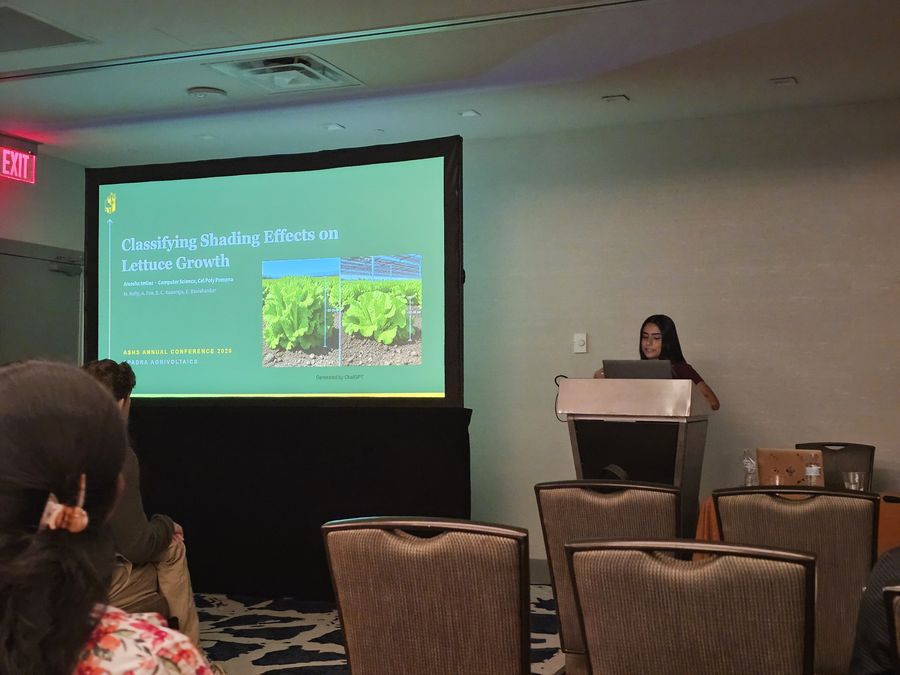
Beyond Mean Yield: Machine Learning Reveals Within-Plot Uniformity as a Key Classifier of Agrivoltaic Lettuce Production

Areesha Imtiaz presenting · with Kelly, Kuhn, Connelly, Campbell Freire, Duong, Briceno, Fox, Cesena Olivas, Kosaraju & Ravishankar

Agrivoltaics · Soil Microbiome
Wed · Aug 5 · 11:45 AMUndergraduate Oral Session 1

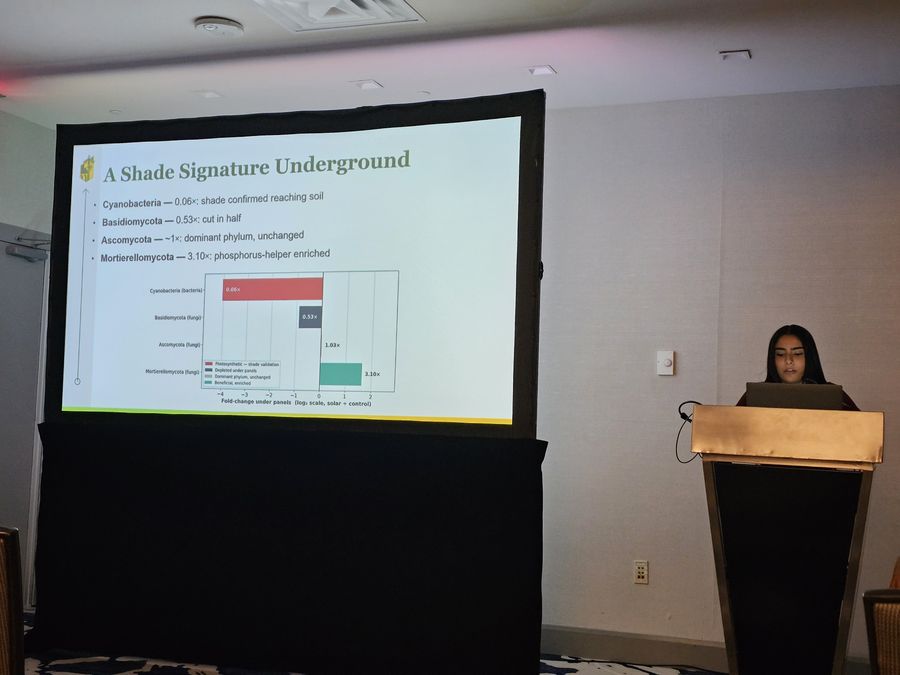
Fixed-Tilt Agrivoltaic Panels Restructure Soil Fungal Communities and Enrich Plant-Pathogenic Genera in a Semi-Arid Romaine Lettuce System

Areesha Imtiaz presenting · with Kelly, Kuhn, Connelly, Campbell Freire, Duong, Briceno, Fox, Cesena Olivas & Kosaraju

Controlled-Environment Ag
Wed · Aug 5 · 1:00 PMUndergraduate Oral Session 1

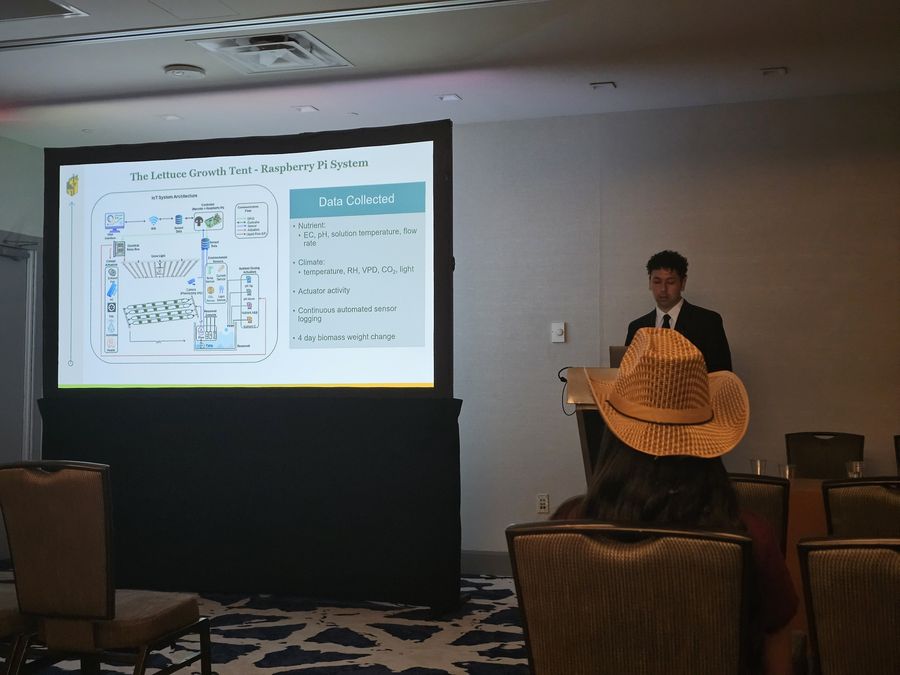
Integrating Low-Cost Adaptive Nutrient Control with Time-Series Modeling to Improve Growth Prediction and Resource Efficiency in Indoor and Greenhouse Lettuce Production

Gerardo Gutierrez presenting · with Mattia, Kosaraju & Ravishankar


Funding & grants

Backed to build real systems.

$348K
Funding awarded
$210K
As Principal Investigator
11
Funded grants & awards
Development of Low-Cost Unmanned Aerial & Ground Vehicle Platforms for Precision Farming
Agricultural Research Institute (ARI) · Co-PI · 2024–26 · #25-04-669
$122K · Funded
Field-Validated Agrivoltaic Decision Support for Southern California Specialty Crop Systems
ARI Campus Grant, Cal Poly Pomona · PI · FY2026–27 · #27-04-108
$100K · Funded
Upgrading the Plant Science Lab with a New Gas-Exchange Measurement System
CPP SPICE · Equipment Modernization · PI · 2025
$24K · Funded
IntelliGrow-AI: An AI-Driven Decision-Support Platform for California Nursery & Greenhouse Production
Plant California Alliance / CANERS Foundation · PI · 2026
$20K · Funded
Next-Gen Mycology: Integrating AI, IoT, and Biotechnology for Sustainable Fungal Production
CPP SPICE · Innovative Instruction · PI · 2025
$17K · Funded
Running RO Like a Cyclic Engine: Maximizing Water Recovery and Efficiency for Urban Farming
CPP Strategic Interdisciplinary Research Grant · Co-PI · 2024
$15K · Funded
Model-Based Decision-Making Tool for Controlled-Environment Agriculture
NC State CEA Center · sub-award · PI · 2024–25
$13K · Funded
Cultivating Tomorrow's Workforce: Undergraduate Classroom Learning in Precision Farming
CPP SPICE · Innovative Instruction · PI · 2024
$10K · Funded
Enabling Energy-Resilient California Greenhouses via Crop-Coupled Semitransparent Organic PV
ARI Seed Grant, Cal Poly Pomona · PI · FY2026–27 · #27-04-119
$10K · Funded
Innovative Cultivation Solutions: An Automated Hydroponic System for Vertical Microgreens
RSCA, Cal Poly Pomona · PI · 2024
$10K · Funded
Cal Poly Pomona Freight Farm Produce-Sourcing Partnership
Partnership for Growth LA / Freedom Farms · Project lead · 2026
$7K · Funded
With gratitude to the sponsors who fund this work
Agricultural Research Institute Plant California Alliance / CANERS CPP SPICE RSCA · Cal Poly Pomona Partnership for Growth LA NC State CEA Center
Partners & collaborators
NC State University University of Georgia Tel Aviv University & ARO, Israel CEMaST · Cal Poly Pomona Spadra Farm

In the classroom

Teaching the polytechnic way: learn by building.

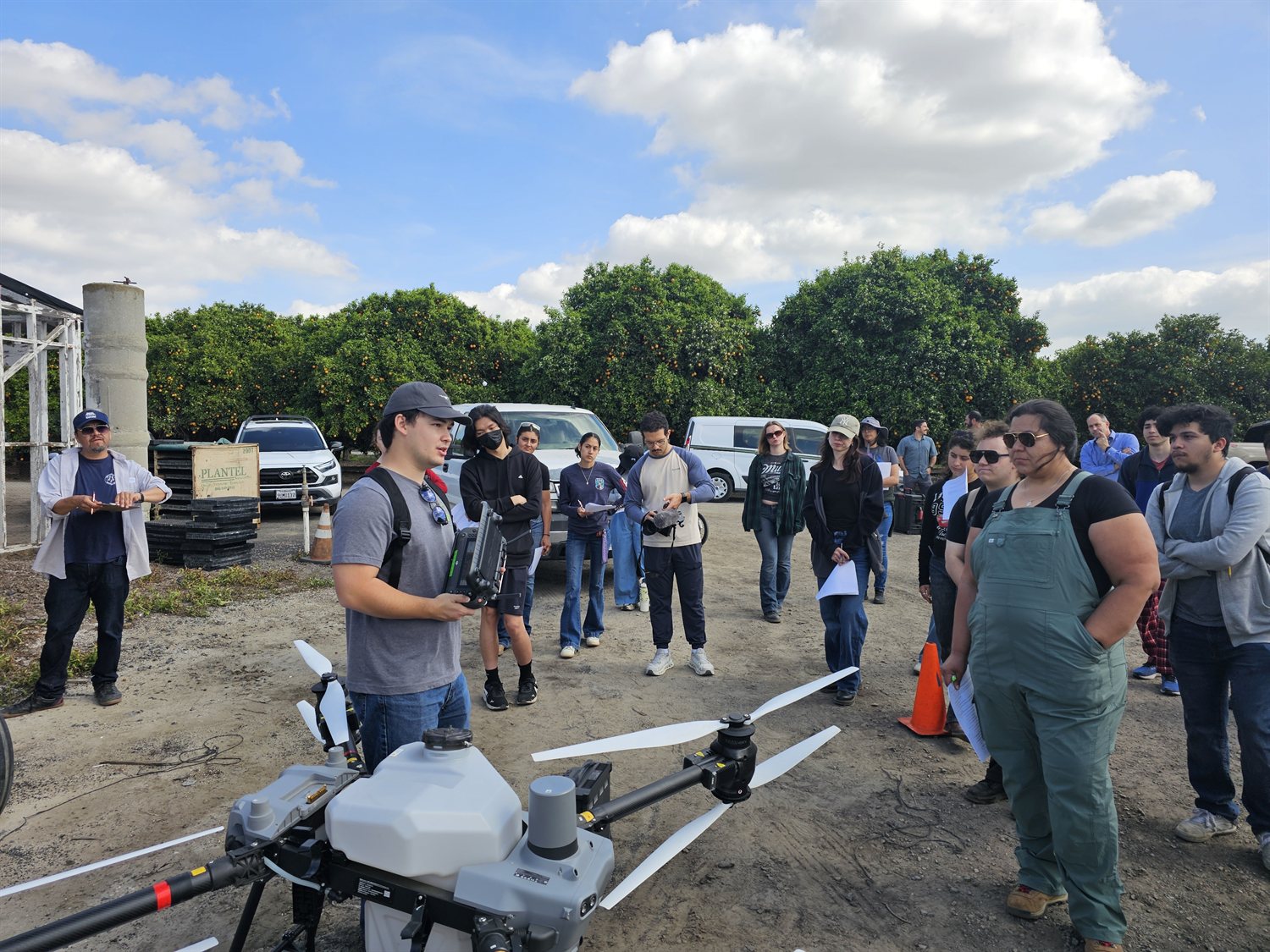
My courses put drones, Raspberry Pi sensors, live crops, and real data in students' hands from week one.

Students gathered around an agricultural spray drone during a precision-agriculture field session in a citrus orchard
Students preparing research plots beneath the agrivoltaic solar array
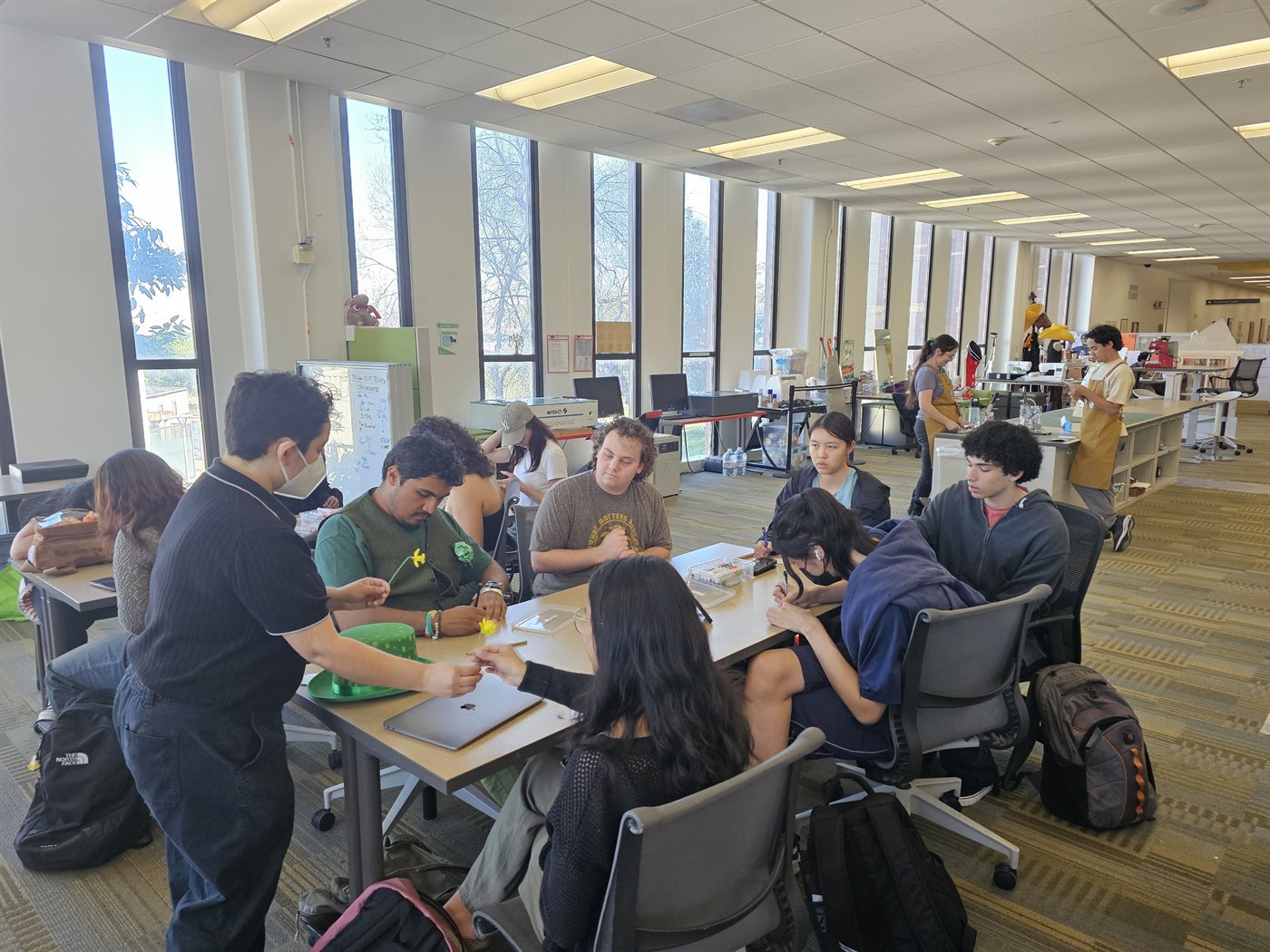
Students examining flowers during a hands-on plant science lab in the makerspace
Intro
PLT 1120 / 1120L

Plant Science 1

Introductory plant biology paired with a hands-on lab: students seed, grow, and measure crops in hydroponic and vertical-farm systems and take leaf gas-exchange readings out at Spadra Farm.

Upper-division
PLT 3020

Technology Innovations in Plant Science

Precision agriculture, remote sensing, IoT, and AI. Students build Raspberry Pi crop sensors, run GPS/GIS and LANDSAT/NDVI mapping, and complete a real project at the AgriScapes farm.

Upper-division
PLT 4210 / 4210L

Production Mycology

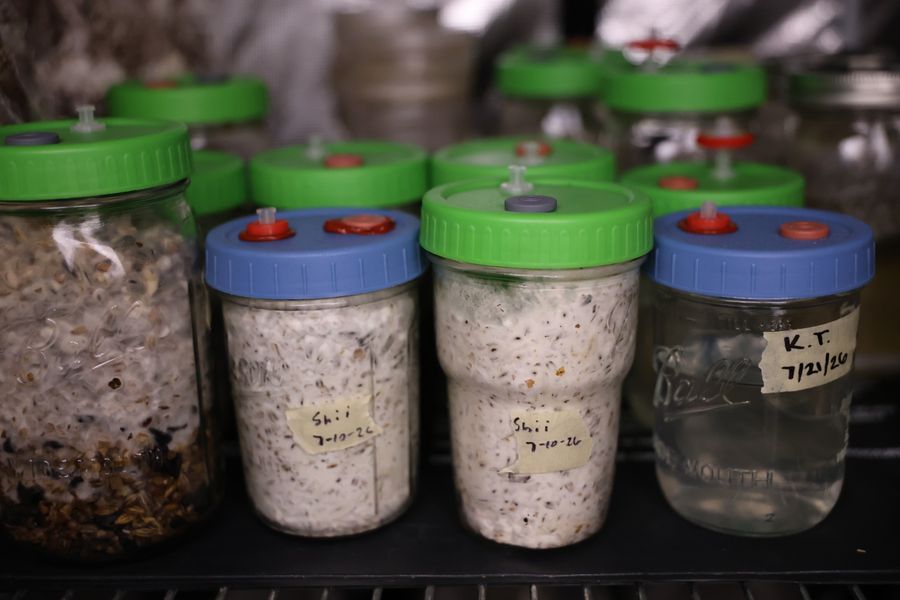
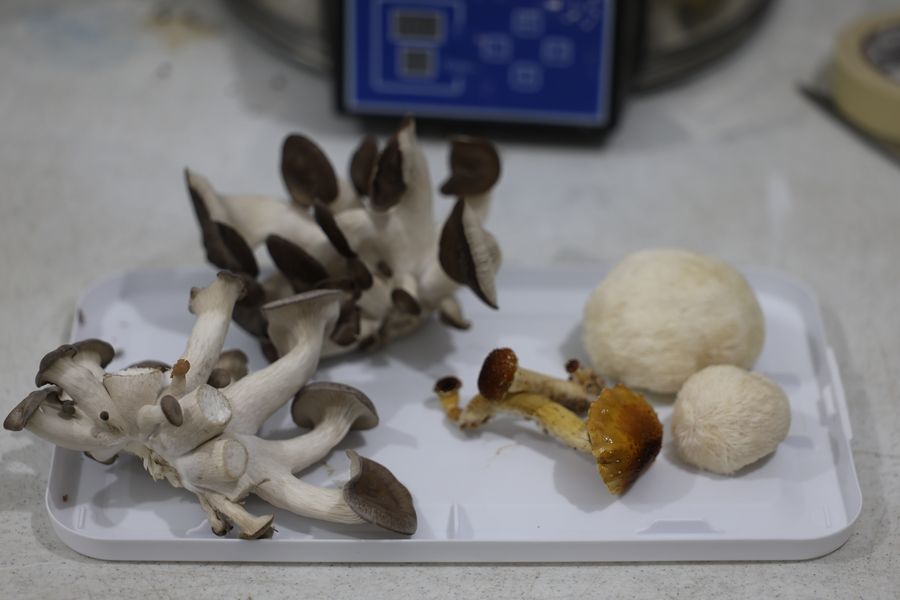
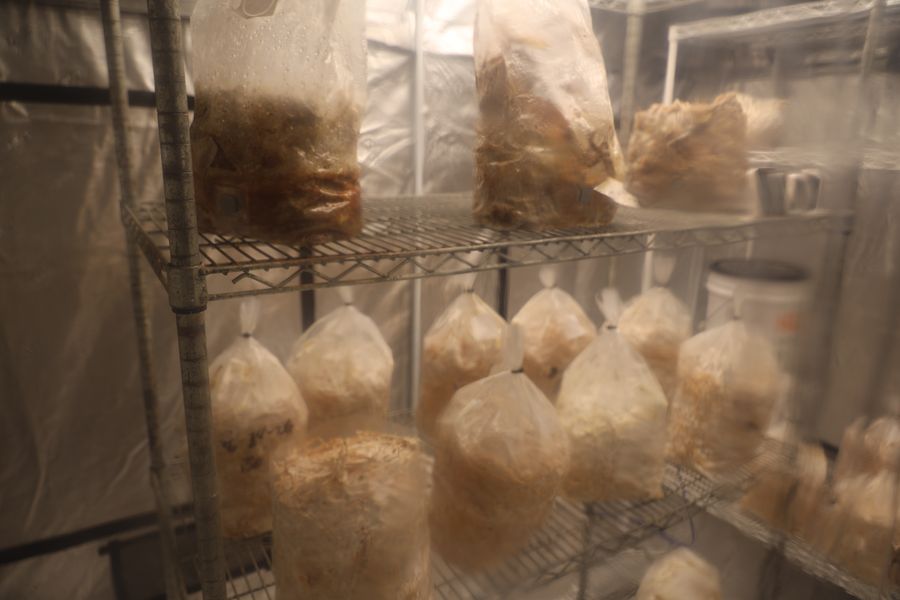
Mushroom cultivation from fungal ID to fruiting, with IoT climate control and automation. Students build a small-scale production system and pitch it to Southern California growers.

Graduate
AG 5200

Statistics in Agriculture, Python Edition

A graduate stats course rebuilt around the modern Python stack: experimental design, regression, growth curves, and machine learning on real agricultural datasets.

Spring 2027
PLT 4020

Agricultural Drone Technology

A new course launching soon: FAA Part 107 remote-pilot preparation and turning multispectral and thermal drone imagery into agronomic decisions.

Two of these courses, PLT 3020 and PLT 4210, earned Cal Poly Pomona's PolyX polytechnic-signature-experience designation for their build-and-operate design, and the lab's instructional work has twice been backed by SPICE classroom-innovation awards.

Hands-on in every course
FAA Part 107 drone flight Multispectral & thermal imaging GIS & NDVI crop mapping Raspberry Pi sensor & controller builds Custom PCB design Automated hydroponics & mycology

Photosynthesis Explorer

An interactive teaching tool I built: students adjust light, CO₂, and temperature and watch a live photosynthesis model respond. Free to use in class.

Open the tool →

The people

The lab is its people.

Engineers, biologists, and builders who like to make things grow. Here's who you'd be working alongside.

Dr. Eshwar Ravishankar

Dr. Eshwar Ravishankar

Principal Investigator

Mechanical engineer turned plant scientist; builds the systems where food and energy meet.

Emma Nguyen

Emma Nguyen

Undergraduate Researcher

Plant Science · Spadra Farm agrivoltaics.

Nathaniel Cox

Nathaniel Cox

Undergraduate Researcher

Mechanical Engineering · Spadra Farm agrivoltaics.

Jai Sutaria

Jai Sutaria

Undergraduate Researcher

Mechanical Engineering, minor in Computer Science · AgriScapes greenhouses. Oscar Perlaza President's Scholar.

Justin Pemberton

Justin Pemberton

Undergraduate Researcher

Computer Science · AgriScapes greenhouses.

Julia Kim

Julia Kim

Undergraduate Researcher

Plant Science · Spadra Farm agrivoltaics.

Chelsea Licon

Chelsea Licon

Research Technician

B.S. Plant Science · AgriScapes greenhouses.

Marty Munoz

Marty Munoz

Research Technician

B.S. Plant Science · AgriScapes greenhouses.

Areesha Imtiaz

Areesha Imtiaz

Research Alum

B.S. Computer Science · agrivoltaic machine learning; ASHS 2026 speaker.


Recent activity

What's new in the lab.

Papers, grants, and milestones as they happen. Send me your latest talks, awards, and new members to keep this current.

2026
TalksSeven lab abstracts accepted for oral presentation at ASHS 2026 (Dallas, Aug 3–7), all led by our graduate and undergraduate researchers, across agrivoltaics, controlled-environment ag, and machine learning. See the lineup →
2026
PaperNew first-author study in Energy Conversion & Management: X benchmarks spectrum-splitting agrivoltaics with spectrally resolved ray-tracing and mechanistic crop modeling, improving water-use efficiency ~15% while holding yields within 5–12% of open-field across arid and humid climates. Read it →
2026
PaperCollaboration with the University of Georgia published in Agronomy, showing agrivoltaic high tunnels can power themselves and still hold crop yield in a subtropical climate. Read it →
2025
PressCal Poly Pomona spotlights the Spadra Farm agrivoltaic project: romaine lettuce grown beneath solar panels in what's believed to be Southern California's first commercial agrivoltaic system. Read the story →
2025
PaperPreprint released: Economic Potential of Open-Field Agrivoltaics with Planar Spectral Beam Splitting, with collaborators in Israel.
2023
MilestoneLaunched the lab (now CIRCAS Lab) at Cal Poly Pomona and was named a CEMaST Faculty Scholar.
2023
PaperGenomic analysis of crops grown under semitransparent organic solar cells published in Frontiers in Plant Science.
2022
PaperGlobal techno-economic study of solar-powered greenhouses published in Energy & Environmental Science.
2020
PaperThe net-zero-energy greenhouse concept published in Joule.

Join the lab

If sunlight, sensors, and crops all excite you, let's talk.

I mentor students who like to build things that grow. Whether you come from engineering, biology, computer science, or the soil itself, there's a bench for you.

Prospective grad students CPP undergrads Collaborators Industry partners
Email Dr. Ravishankar →